


Making a pilgrimage to the Holy Land requires a clear understanding of legal travel requirements. The Saudi Arabian government enforces strict visa regulations for all pilgrims.
Entry permits for Umrah and Hajj come with distinct rules. Using an improper visa—especially during the Hajj season—can seriously compromise your pilgrimage and lead to severe legal issues.
This article provides a comprehensive guide to the differences between Umrah and Hajj visas, covering their purposes, validity periods, legal requirements, and penalty risks.
Why Is Understanding the Difference Between Umrah and Hajj Visas Crucial?

Many prospective pilgrims assume that all visas issued by Saudi Arabia for religious purposes function the same way. However, Umrah and Hajj visas are governed by entirely different legal frameworks.
Using a visa outside its intended purpose during the Hajj season is treated as a major offense. Saudi authorities now utilize advanced scanning technology at all entry points leading into Makkah.
Knowing these differences protects you from fraudulent travel agencies and ensures you can perform your rituals with complete peace of mind, free from legal risks.
Quick Summary: Umrah Visa vs. Hajj Visa

For a quick overview, here is a comparison table between official Umrah and Hajj visas:
Detailed Breakdown: Umrah Visa vs. Hajj Visa

Purpose and Function
An Umrah visa is designed for Muslims undertaking the Umrah pilgrimage and visiting holy sites in Makkah and Madinah. It cannot be used to perform Hajj rituals.
A Hajj visa, on the other hand, is issued specifically for fulfilling the mandatory rites of Hajj. Holders are granted full legal access to complete all rituals across Arafat, Muzdalifah, and Mina.
Validity Period and Issuance Timing
Umrah visas are available nearly year-round, typically resuming a few weeks after the Hajj season ends. They generally allow a stay of up to 90 days.
Conversely, Hajj visas have a very tight issuance window. They are granted only near the month of Dhu al-Hijjah and automatically expire once the Hajj period concludes.

Permitted Regional Access
Umrah visa holders are free to visit major cities like Jeddah, Makkah, Madinah, and Riyadh outside the Hajj season. However, access to Makkah is completely closed to Umrah visa holders as the Hajj season approaches.
Hajj visas grant full access to the sacred sites of Armuzna (Arafat, Muzdalifah, and Mina) during the days of Tashreeq. Without an official Hajj visa, entry into these designated areas is strictly prohibited.
Official Types of Hajj Visas and Legal Requirements

To avoid illegal schemes, make sure you are familiar with the legitimate Hajj visa categories recognized by the Saudi Government and the Ministry of Religious Affairs (Kemenag):
-
Government Quota Hajj Visa (Regular & Special/ONH Plus): Officially managed by the Ministry of Religious Affairs through national quota waiting lists.
-
Mujamalah / Furoda Hajj Visa: Direct invitation visas issued by the Kingdom of Saudi Arabia, managed exclusively by licensed Special Hajj Organizers (PIHK).
Using non-Hajj visas—such as tourist, visit, or work visas—to perform Hajj is strictly forbidden.
Important Note: The issuance of Furoda visas rests entirely at the discretion of the Kingdom of Saudi Arabia, and approvals are frequently finalized right before the peak of the Hajj season. In past seasons, some pilgrims faced delays or were stranded due to late visa processing or fake Furoda visa promises by unlicensed operators. Always register through an officially licensed PIHK and verify your visa's validity prior to departure.
Severe Penalties for Performing Hajj Without an Official Visa

Saudi authorities actively enforce strict surveillance and impose harsh penalties on anyone attempting to perform Hajj without proper authorization:
-
Heavy Fines: Substantial financial penalties (reaching tens of thousands of Saudi Riyals) for individuals caught without official permits.
-
Detention and Deportation: Unregistered pilgrims are detained at checkpoints and immediately deported.
-
Entry Bans (Inadmissibility): Deportees face a minimum 10-year entry ban from entering Saudi Arabia.
-
Penalties for Travel Agencies: Unlicensed agencies face criminal prosecution and immediate revocation of their operating licenses.
Essential Preparation Checklist Before Departure

-
Verify Travel Agency Licensing: Confirm that your agency is registered with Kemenag as an official PPIU (for Umrah) or PIHK (for Hajj).
-
Double-Check Visa Type: Ensure your issued visa strictly matches your travel purposes.
-
Keep Digital & Physical Copies: Maintain backup copies of your passport, e-Visa, and official app registrations (such as Nusuk).
-
Secure Reliable Connectivity: Navigating, staying in touch with your group, and accessing official verification apps in Saudi Arabia require a stable internet connection.
Stay Connected During Umrah and Hajj with Global Komunika eSIM
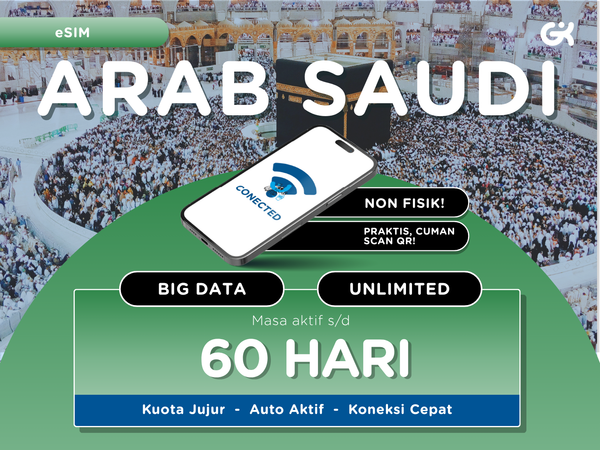
Maintaining seamless communication while in Makkah and Madinah is essential—whether you need to book Raudhah slots on the Nusuk app, locate your travel group, or stay in touch with family back home.
For effortless connectivity, rely on a Saudi Arabia eSIM or SIM card from Global Komunika. Skip the long lines for local SIM cards at Jeddah airport and get connected right when you land.
Enjoy a peaceful, focused, and uninterrupted pilgrimage experience. Discover our best Umrah & Hajj data plans today at gkomunika.com!


